Sunday, April 3, 2022

Yogasana - Ashwa Sanchalanasana (Equestrian Pose)

Ashwa sanchalanasana or famous called equestrian pose is an asymmetric posture that involves keeping the spine long and your chest open, integrates the alternate stretching of the legs and mobilizes the pelvis and sacroiliac joint. The asana name comes from sanskrit words ashwa meaning horse, sanchalana meaning stepping movement or marching. 

Ashwa sanchalanasana or equestrian pose


Steps:

  1. From Uttanasana, place your palms next to your feet, all fingers in line (bend your knees if you need to)
  2. Keep the hands fixed on the mat and do not move it during the rest of suryanamaskar.
  3. Take a big step back with your right foot
  4. Rest your right knee on the mat.
  5. Lengthen the spine, open the chest, and look forward.


Benefits:

  1. It lengthens the spine or extends the column
  2. It helps in stretching quadriceps of the rear leg.
  3. The psoas is lengthened.
  4. The gluteus maximus of the front leg is stretched.
  5. It's dynamic practice provides agility to our body movement and develops asymmetric coordination of legs and hips.

Thursday, March 31, 2022

The truth about coconut oil. Is it really healthy?

DISCLOSURE: This post may contain affiliate links, meaning I get a commission if you decide to make a purchase through my links, at no cost to you.

Different fats, such as coconut oil, were once thought to be just as dangerous as animal fat, and that consuming them would eventually lead to heart disease. However, we have learned that this is not the case, and that coconut oil is actually highly beneficial to our cardiovascular system. Isn't it one-of-a-kind? So, what distinguishes it from other oils? From food products like butter and lard, which are also used in cooking but pose significant health hazards.

So what's in a coconut?

Coconuts are actually wonderful providers of nourishment, despite their modest look. With its healthy meal, oil, and juice, it may also be called a full food. Did you even know that some individuals rely only on coconuts to survive? That's how good this under-appreciated fruit is. The oil is, without a doubt, the most nutritious and useful component of the fruit. It's no surprise that people utilize it from the inside out because it contains over 90% saturated fat and has anti-fungal, antimicrobial, and antibacterial effects.

What is virgin coconut oil and how does it differ from other coconut oils?

copra

[Information on photo source]

To begin, you need understand that most commercial coconut oils are made from copra, or dried coconut meat. This can be done in a variety of ways, including sun drying, kiln drying, and smoke drying. If dried coconut meat is utilized as the basic material, the unrefined oil produced is unfit for consumption, at least not after purification and refinement. This is because, due to the manufacturing process, dried coconut meat may be quite unclean. Refined, Bleached, and Deodorized (RBD) coconut oil is the typical product generated from copra. That suggests that chemicals were utilized in the manufacturing process.
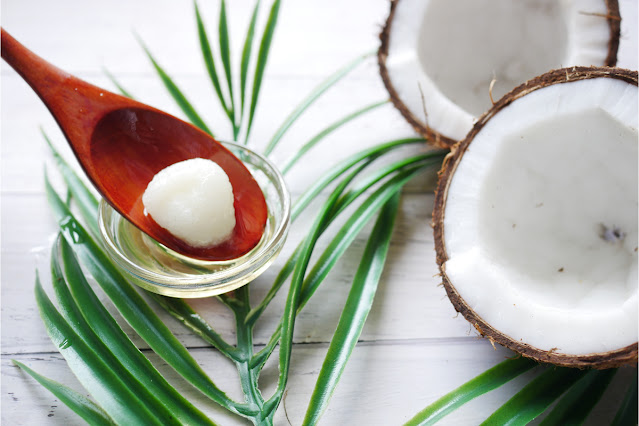
Fresh coconut meat, virgin coconut oil

Virgin coconut oil, on the other hand, is made from fresh coconut meat and hence keeps the aroma and flavor of the genuine coconut. In fact, this is one of the ways you can tell it apart from an RBD. Virgin coconut oil is believed to be considerably healthier and safer when it comes to human ingestion because it hasn't been treated and was extracted in a hygienic method. It's worth noting that it keeps significantly more of the excellent, healthful stuff that's made coconut oil a popular functional food among doctors and health-conscious individuals all over the world.

However, it has recently been recognized for its efficiency in speeding up weight loss in patients as well as lowering the risk of developing heart disease.

Here are some of the advantages of consuming virgin coconut oil on a daily basis either using it as a cooking oil or consuming it raw.

Health benefits of coconut oilHealth benefits of virgin coconut oil


Who am I?

beliefThis simple question seems easy to answer at first. However, as soon as I start to think about it, I realize that giving my name or a description of physical appearance does not describe the myriad of thoughts, moods, actions and reactions which comprise myself and my life. Even a description of what I do becomes confusing because, everyday, I wear so many different hats. I may start the day as a husband or a wife. At work I may become a engineer, secretary, a clerk or a teacher. At lunch I may meet a friend and in the evening an acquaintance. Which of these roles that I play is me?

In each role that I play a different facet of my personality emerges. Yet, I am quite aware that my true identity is not defined by the role I play. How can I think of myself? Who am I really? What is needed is something constant, safe and stable. We all know that gradually, over time, the human body is declining. It is not stable or constant. So in yoga while doing meditation instead of this bodily identification, we start with our thoughts. Because thoughts are always there, whatever age we are. Their content may change but our ability to think does not.

Soul is the only form that cannot be destroyed. It is something without any physical dimension. The soul is like a driver and the body is the car. To be in complete control, the driver has to sit in the place where he has access to the controls and also can collect all the necessary information to make decisions. Each thought, leading to words and actions, begins with an impulse from the brain. In Yoga it is considered that the soul is located in the center of the forehead in the vicinity of the brain. This knowledge provides me with a constant point of reference on which to focus my attention.

So, my identity is a soul which is a living, spiritual and eternal being, and all other identities - teacher, engineer, husband, wife and so on are simply different roles which my soul play. In meditation I create an awareness of myself as a soul. This naturally leads to an experience of these peaceful, positive qualities. This is what is called 'soul-consciousness'. In meditation I begin to think about my true identity. I let thoughts about the soul and its qualities fill my mind. Through understanding and experiencing my true qualities, I regain confidence and self-respect and am no longer pushed and pulled by expectation of others. By remaining soul-conscious, I will stay in my true state of peace. This is something which does, of course, take time and patient effort to practice. The reward of practice is enjoyable in itself and the greater benefits will accumulate over time.

MEDITATION PRACTICE


When you sit to meditate, choose the quietest place you can find, preferably in a room which you do not use very often. If this isn't possible, sit where the familiar objects around you won't distract your attention. This mental preparation will help your concentration. Start with 10 or 15 min. This will gradually lengthen naturally with experience. Soft or subdued lighting will help.
When you finish meditation, just take a moment to reflect on what you have experienced and note how your mood has changed. This will emphasize your experiences and help you appreciate what you are gaining through meditation. One more suggestion of great benefit is: Don't just meditate when you feel like it. The greatest progress is possible at the time when you really don't want to meditate or when you feel you can't. That's the time when you need to meditate the most.

THOUGHTS FOR MEDITATION 


These thoughts are only a suggestion. Create your own similar thoughts if you prefer. Any thoughts based on the awareness of the self as a soul are valid. Think slowly and aim to experience each thought before moving on.

You should withdraw your attention away from your physical body. You lie behind your eyes in the center of the forehead, an eternal spark of life energy. This energy empowers the body. You are a non-physical being, an eternal soul. You are an actor and your body is simply a costume. You find deep peace and contentment within. Know your true self, an eternal, pure and peaceful soul. You are in the ocean of peace.

Wednesday, March 30, 2022

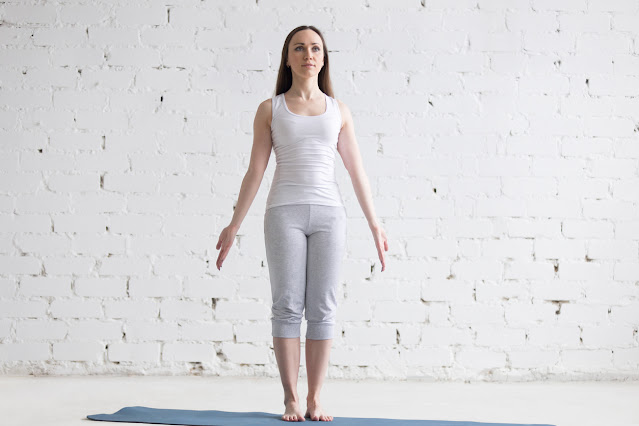
Yogasana - Tadasana (Mountain pose)

It is the root posture, the mother from which all other postures in your day to day life arise. The instructions for building tadasana correctly can (and should ) apply throughout your yoga practice.

It also constitutes the art of standing:

Tadasana is the present and continuous action unfolding in stillness.


tadasana mountain pose


Steps:

1. Stand with your feet together

2. Fan out your toes and let them spread over the ground

3. Distribute the body weight over the entire sole of the foot

4. Activate legs, without tension and without excessive muscle strength

5. Lengthen the spine column.

6. Keep shoulders gently back and shoulder blades toward the ground

7. The chest expands and the abdomen lengthens.

8. Elongate the back of the neck allowing the crown to float towards the ceiling. Keep your throat relaxed

9. Keep active arms next to the body and fingers of the hands directed to the ground

10. As you breathe, increase the stillness by feeling the subtle internal movement of the breath.


Benefits:

• Reveals our vices and postural imbalances and helps us to correct them.

• Improves posture by learning to evenly distribute body weight on the soles of the feet

• Reduces lumbar pressure

• According to yogacharya B.K.S. Iyengar “provides lightness to the body and agility to the mind"

• Activate our somatic intelligence

• It also calms the mind